You Are Not Being Stalked, It’s Just Adtech.

Advertising technology, aka Adtech, is the tool that digital advertisers use to manage, track, and analyze their digital ads online. This technology benefits digital advertisers by allowing them to reach target audiences, uncover consumer insights, measure return on investment (ROI), and more. Adtech is essential not only for the advertiser, but also for the publisher. In the world of Adtech, the advertiser is the demand-side and the publisher is the supply-side. In simpler terms, the demand-side are the ones that are buying the space for the ads and the supply side are the ones that are supplying the space for the ads and earning the ad revenue.

Programmatic advertising is how ads are targeted to us. This method of advertising allows the supply-side to effectively reach target audiences through ad placements. Click here to read more about the Adtech ecosystem.


Social Media: A New Political Landscape

Social media’s impact on modern politics cannot be understated. From the Twitter fights during the 2016 presidential election to the Facebook memes that parents seem to love to share, candidates have found a new way of reaching their voters. This format allows candidates and politicians to skip right past the traditional media outlets and establish a more personal connection with voters and constituents. While social media is an amazing tool for this facet of campaigning, there are many more that we haven’t touched on in this post. For a brief introduction into this new political landscape, I’d recommend checking out this article by ThoughtCo that lists some more ways Twitter and Facebook are used as campaign tools: https://t.co/fKz6hvpwA4?amp=1&fbclid=IwAR372HqXNxCpohk55GuJB3BkIccYU1syIO7X7AsstHEI78ZspZzZVcTH8RE

Instructional Design: The Education/Technology Job You Have Never Heard Of

As a person working with the field of IT, you know there is a lot of information on the Internet about everything. So much, it almost becomes impossible to quickly find the right information for a certain subject, which inhibits the ability to properly learn something; you either get a too many options to make a decision, or specific information is in separate articles somewhere else. In short, information is disorganized, and learning becomes a disorienting journey. What if there was a job that focused on how information is structured and processed by the user? You get Instructional Design.

Instruction Design (or called Instructional Systems) is the process of creating structures and delivery systems for instructional content to be presented to an audience. Though not exclusive to IT, it incorporates a lot of the same skills, such as Technical Writing (needing to be concise and direct with directions), knowledge of technology (knowing how to code, working with software, video production), and understanding how information interacts with itself and the audience (information organization/knowing your audience). Here is an article that explains ID more thoroughly, from its past conception, to how it applies today:

Instructional Design

Newly discovered iPhone 11 issue puts your location at risk.

KrebsonSecurity recently discovered an issue with the Apple iPhone 11 regarding location privacy. The group found that, even with location sharing disabled in settings, the device was still tracking where the iPhone was. At first, Apple dismissed this issue and later went on to provide a statement regarding it. They confirmed that, with the launch of iOS 13.3.1, this issue will be fixed.

Many iPhone users across the globe are concerned about their privacy. Apple needs to address this as quickly as possible to keep their reputation in good standing. Currently, there is no known workaround for this issue, and users are forced to wait until the iOS 13.3.1 update to be able to safely hide their location. Privacy and security has long been a major concern with smart technology, and that trend continues here.

Read the full article from Forbes here:
https://www.forbes.com/sites/kateoflahertyuk/2020/01/18/apple-ios-1331-important-new-iphone-privacy-feature-confirmed/?ss=cybersecurity#5b70e4f870db

New AI Delivery Technology and its Unintended Effects on Disabled Users

people brasil guys avpaulista
Photo by Kaique Rocha on Pexels.com

With AI technology improving by leaps and bounds over the past year, companies are still receiving feedback on issues that have arose from these new pieces of technology. Specifically, AI delivery robots have received harsh feedback on social media platforms from individuals on college campuses and large cities. Among these reviews, many come from the disabled community, or disability rights activists. In her article, Emily Ackerman tells her own experience with AI delivery robots as a wheelchair user. She explains that although an able person would be able to simply step around a stopped delivery robot, her wheelchair was too wide for the sidewalk, and was therefore stuck in a busy intersection on campus.

Ackerman stresses how important the hiring process is for big tech companies, and how hiring disabled people, especially disabled designers, can help avoid many uncomfortable or even dangerous situations for many people. While technology is developed with the goal to make life easier, she explains that the disabled community is not always included in this group of people. Emily Ackerman is a disability rights activist and Ph. D. student at the University of Pittsburgh, where her encounter with the AI delivery robot occurred.

Filter Bubbles, Echo Chambers, and Online News Consumption: Heading down the wrong path?

The media environment has changed drastically since the turn of the century.  The internet, along with social media and online news outlets such as CNN and Fox News, has completely altered the way we consume media. The current 24-hour news cycle we know today is practically unrecognizable from that of even four years ago. With our world in a precarious position not seen for decades, the question must be asked: are the technologies intended to bring us together actually serving to divide us further? 

A recent study by Flaxman, Goel, and Rao aims to answer that question and more. In their paper, they state the case for two opposing sides—the first being that recent technological changes would lead to “echo chambers” and “filter bubbles,” and the second asserting that these changes would instead increase exposure to diverse perspectives. Their study addressed the debate head-on, examining “web-browsing histories for 50,000 US-located users who regularly read online news.” Their findings, as they put it, were rather counterintuitive. They found that “social networks and search engines are associated with an increase in the mean ideological distance between individuals. However, these same channels also are associated with an increase in an individual’s exposure to material from his or her less preferred side of the political spectrum.” 

These findings don’t exactly counteract each other, rather, they may imply an unaccounted force driving the polarization of our media and individuals. While we may not yet know what that force is, the havoc it wreaks will surely be felt for years to come. Click here to read the study. 

The Internet of Things and its role in cyberattacks

The World Economic Forum report has again listed cyberattacks in the top ten list of threats facing the world in 2020. Newer technologies such as the Internet of Things, come with the risk of security flaws that could increase the likelihood of cyberattacks. Ranked 8 on the list of potential threats, cyberattacks are a major concern, with the risk of sensitive information being released, putting individuals, and ententies at risk.

According to the article by ZDnet, “Large numbers of Internet of Things product manufacturers have long had a reputation of putting selling the products ahead of ensuring they’re secure.” The WEF warns that the rise in IoT based attacks hints at the likelihood of a potential cyber attack.

Despite these concerns, the WEF stated that efforts to address security challenges posed by the IoT and other newer technologies is “maturing”. Over time, hopefully the security behind these devices will improve, minimizing the risk of devastating attacks that target sensitive information and put privacy at risk.

https://www.zdnet.com/article/the-dark-side-of-iot-ai-and-quantum-computing-hacking-data-breaches-and-existential-threat/

The Future of Vehicle Saftey

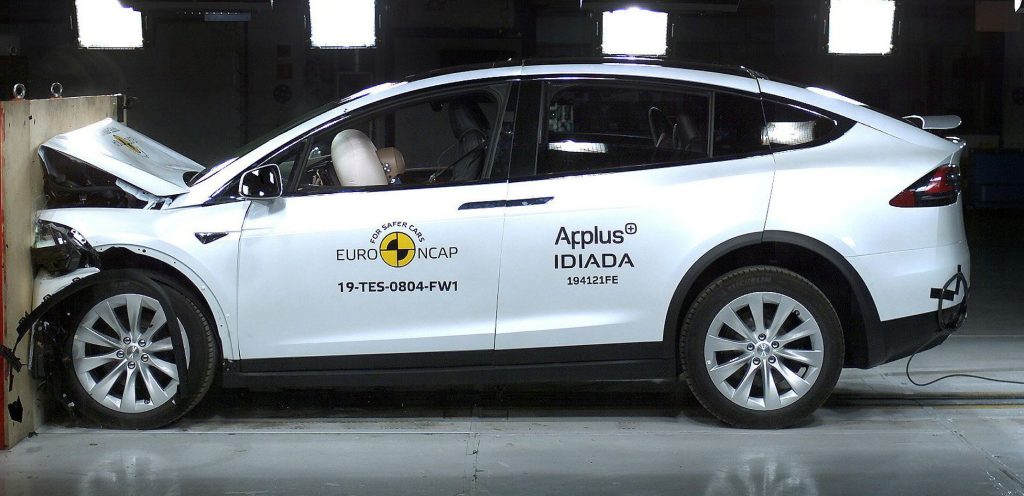
For decades motorized vehicles had been considered steel death traps, and with good reason. Lack of saftey equipment and regulations led to many fatal car accidents. It wasnt until swedish engineer, Nils Bohlin, created the three point seat belt in 1959 that car manufacturers began to focus on saftey as well as transportation. Thanks to his invention and many other saftey features like, Airbags, Adaptive Cruise Control, Blind Spot Detection, Rear-view Cameras, and Lane Departure Warning, cars are safer than ever.

However, with the modernization of motorized vehicles and the popularity of Electric Vehicles, car manufacturers face new saftey hazards. They face a double edged sword. The up-side to modernization is new computer programs allow cars to update their softwares much like our laptops and phones do, optimizing vehicle performance and providing owners with up-to-date features and bug-fixes. The down-side being, now cars are exposed to hackers and cyber attacks, allowing criminals to sieze control of vehicles from remote locations. Check the link below and see for yourself just how bad it is, it may surprise you.

https://cacm.acm.org/news/241766-new-study-shows-just-how-bad-vehicle-hacking-has-gotten/fulltext

Health IT techs at CES 2020

In this blog post I will be talking about a few cool technologies at CES 2020. This year’s CES was Jan 7 – Jan 10 at Las Vegas, NV and companies introduced their latest products. At this tech exhibition, we saw hundreds of products aimed at health at this showcase of the latest gadgets, robots and home technology that could be coming to the market soon. one of the most interesting products was the Deep Sleep Headband. The product uses sensors to monitor brain activity and detect deep sleep then plays quiet tones to improve sleep.

Technology and privacy issues

Do you ever wonder what happens when you use technology what might I maybe ‘allowing’ by simply just using your computer? As many of us know when you first get a new product and turn it on for the first time you have to agree to their terms. Look at this really good article to learn more on what things could be using your information without you knowing.

https://www.forbes.com/sites/quora/2019/01/15/as-technology-advances-what-will-happen-with-online-privacy/#6af223731c45

Design a site like this with WordPress.com
Get started